

DUI Sentencing Breakdown
DUI Court Success
Graduates of DUI Court
Recidivism among graduates was a mere 4%
Non-Completers
Recidivism among individuals who did not complete DUI Court was 25%
United States Restorative Justice Statistics
Recidivism Reduction
A Vera Institute of Justice report found that restorative justice programs in the U.S. (e.g., in Minnesota, California, and Colorado) consistently reduce recidivism, particularly for youth and low-level adult offenders.
A study in Colorado showed that restorative justice participants had recidivism rates 15-25% lower than those in traditional court systems.
Victim and Offender Satisfaction
In U.S. programs using Victim-Offender Dialogue (VOD):
Over 90% of victims reported being satisfied with the process.
Over 80% of offenders expressed a deeper understanding of the impact of their actions.
Cost Savings
California-based Restorative Community Conferencing (Alameda County):
For every $1 spent, the county saved $3 to $5 by reducing court and incarceration costs.
Restorative justice programs often divert individuals away from jail, significantly reducing system-wide expenditures.
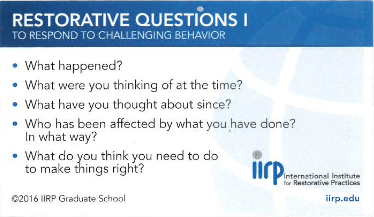
Restorative Practice Questions:
These questions are designed to guide people to come to conclusions on their own about their accountability and to figure out what the right thing would be going forward. (Source: O’Connell, T. (2009). The origins of restorative conferencing. Journal for Peace and Justice Studies, 18, 87–94.).
For the DUI Offender:
- What happened?
- What were you thinking of at the time?
- What have you thought about since?
- Who has been affected by what you have done?
- What do you think you need to do to make things right?
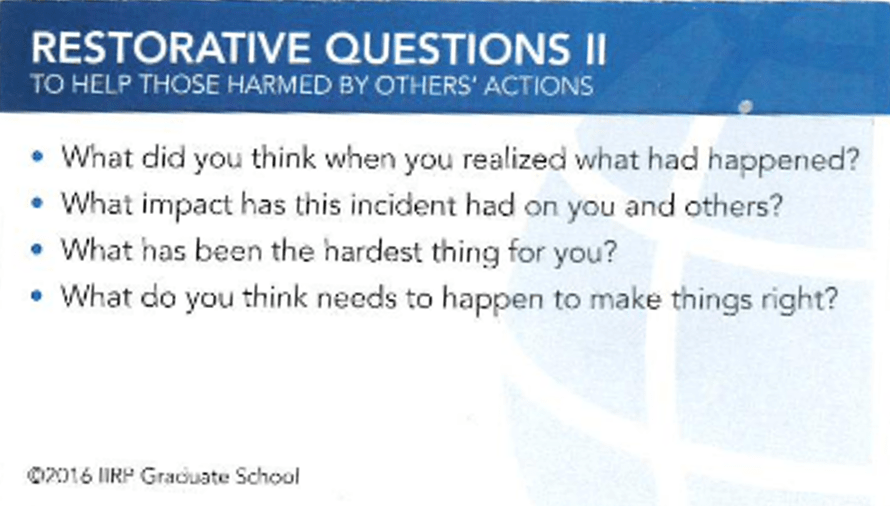
For the DUI Victim:
- What did you think when you realized what happened?
- What impact has this incident had on you and others?
- What has been the hardest thing for you?
- What do you think needs to happen to make things right?
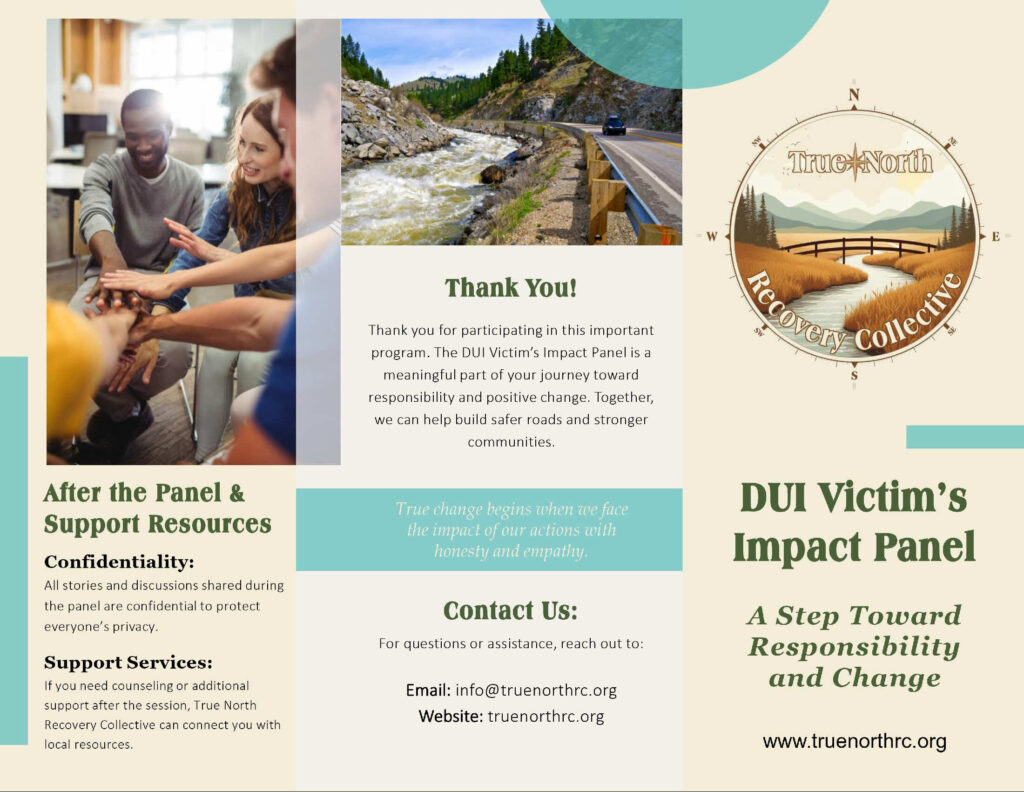
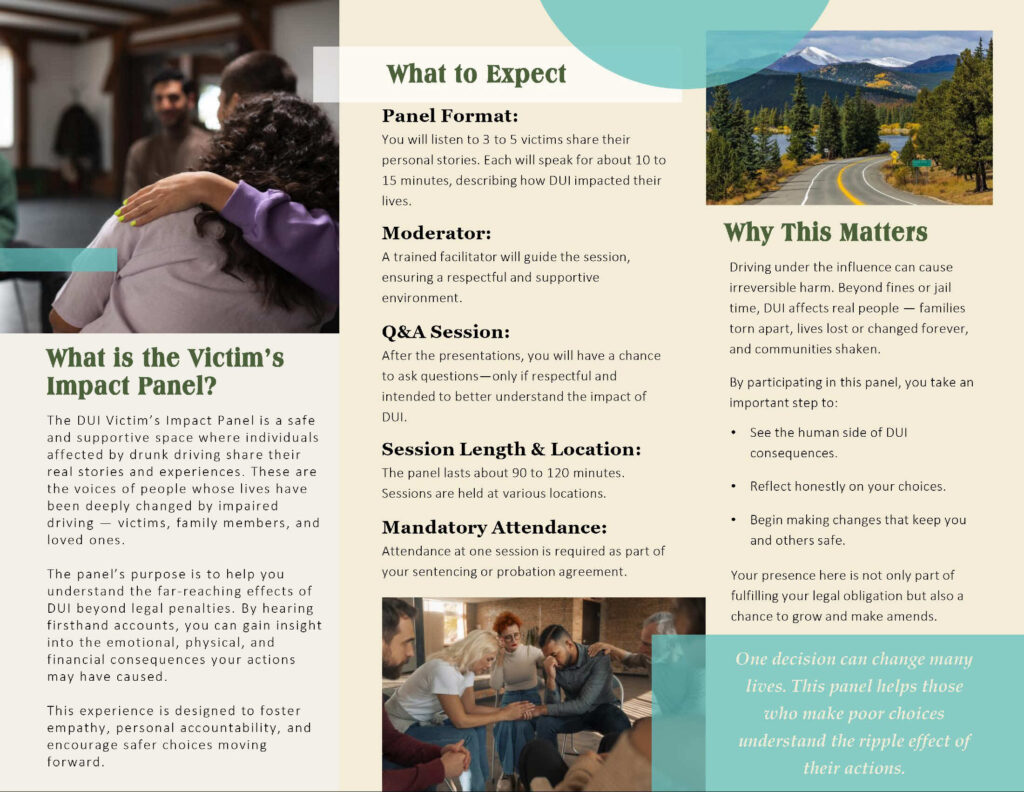
Check Out the Collective's Brochure!
Educational Materials (Provided by the International Institute for Restorative Practices - IIRP)
- Restorative Practices: Explained – IIRP Graduate School: This webpage gives some basic information on what Restorative Practices are and includes a video that clarifies the purpose and reasoning behind Restorative practices.
- Check out these thought-provoking presidential papers on restorative practices that explore how dignity, healing, and community can shape more compassionate systems:
- A Science of Human Dignity: Belonging, Voice and Agency as Universal Human Needs by Frida Rundell, Ph.D. — A developmental model for supporting traumatized youth through structured, relational care.
- Processing Trauma Using the Relational Care Ladder by John W. Bailie, Ph.D. — A framework identifying belonging, voice, and agency as universal human needs central to dignity and restorative work.
- A Restorative Framework for Transforming Police Practice by Kerry Clamp, Ph.D. — A vision for shifting police culture through community-centered, restorative approaches.
Explore how two educational institutions have integrated restorative practices to foster community and address behavioral challenges:
Bronx School District, NYC: Implemented restorative practices across 180 middle and high schools, focusing on community building, trust, and student-led initiatives like the BOND peer mediation program to enhance academic success and emotional intelligence.
American School for the Deaf, West Hartford, CT: Incorporated restorative practices into their PACES Residential Treatment Program alongside PBIS, utilizing conflict resolution scripts, circle time, and data tracking to support neurodiverse students and create a cohesive campus environment.